

Generative AI has fundamentally changed how people create content.
Large language models can write articles, generate code, produce images, and assist with creative work. Yet these capabilities remain largely confined to digital environments.
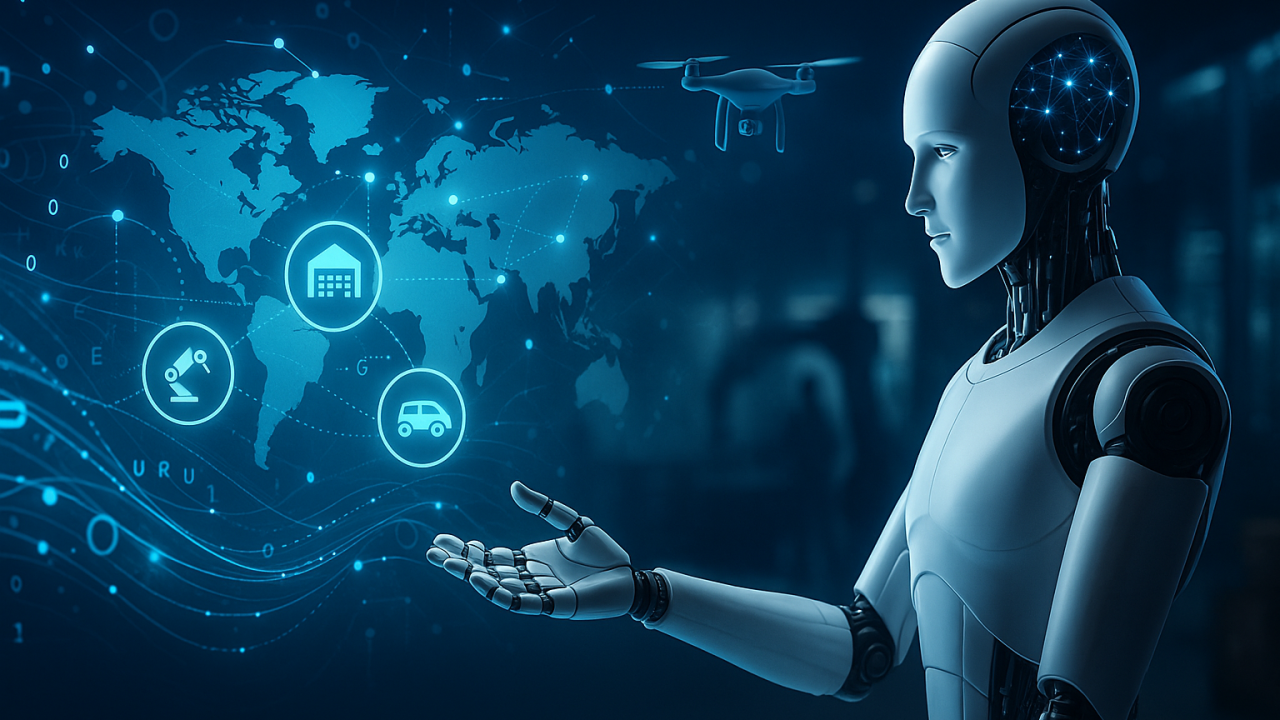
Physical AI represents the next major leap.
Instead of simply generating information, Physical AI enables machines to understand their surroundings and perform real-world actions.
Understanding the Difference
Generative AI focuses on:
- Language understanding
- Content generation
- Human-computer interaction
- Knowledge reasoning
Physical AI focuses on:
- Environmental perception
- Spatial understanding
- Motion planning
- Autonomous decision-making
- Physical execution
Simply put:
Generative AI tells you what to do.
Physical AI actually does it.
Why Is Physical AI Becoming Essential?
The physical world is filled with uncertainty.
Lighting changes.
Objects move.
People behave unpredictably.
Weather changes.
Machines encounter unexpected situations every second.
To operate safely and efficiently, AI must continuously observe, predict, and adapt.
This requires technologies such as:
- Real-time perception
- Sensor fusion
- Reinforcement learning
- World models
- Robot control systems
These capabilities enable intelligent systems to make decisions in constantly changing environments.
Industry Transformation
Physical AI is already reshaping numerous industries.
Examples include:
- Industrial robotics
- Autonomous vehicles
- Smart logistics
- Warehouse automation
- Agricultural robotics
- Healthcare robotics
- Smart infrastructure
Organizations are increasingly investing in AI systems that bridge digital intelligence with physical execution.
Business Value
For enterprises, Physical AI offers significant advantages:
- Higher operational efficiency
- Reduced labor costs
- Improved workplace safety
- Greater manufacturing flexibility
- Faster decision-making
- Increased automation
As AI continues to evolve, competitive advantage will depend not only on software intelligence but also on the ability to integrate AI into physical systems.
Conclusion
Artificial intelligence has evolved from perception to understanding, from understanding to generation, and now from generation to action.
Physical AI represents the beginning of intelligent machines that can truly interact with and transform the physical world.