

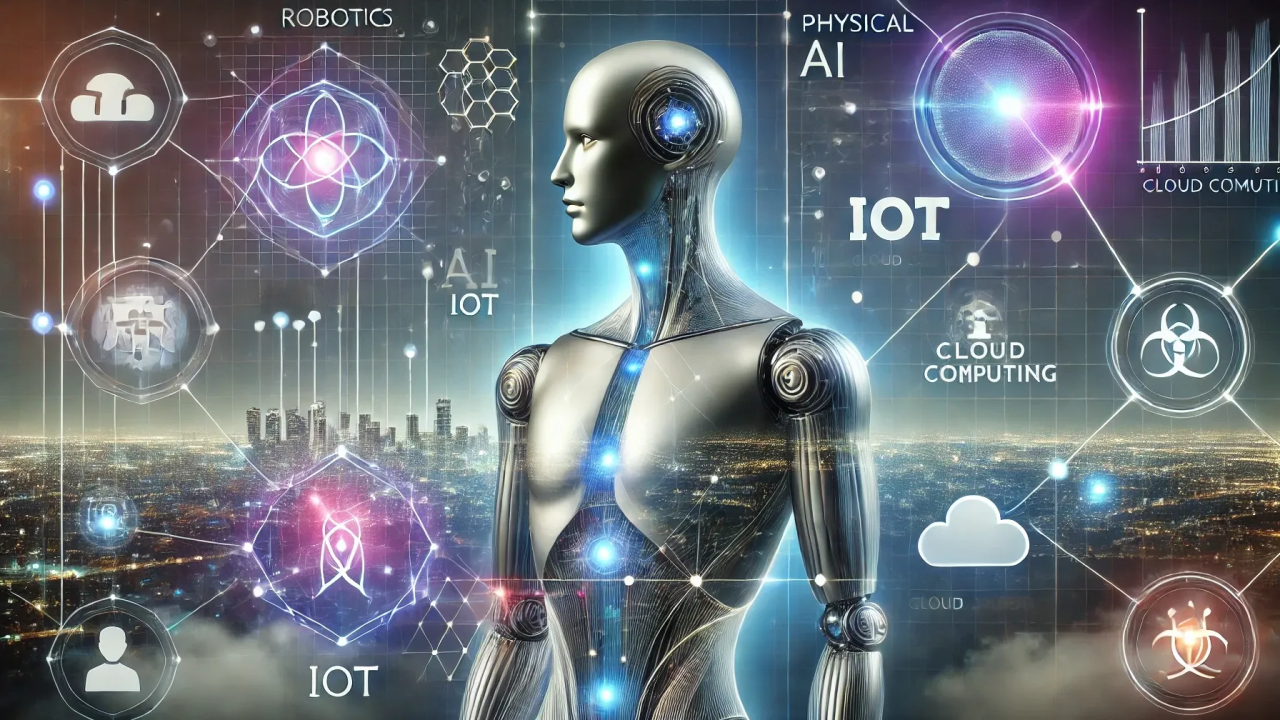
Over the past few years, large language models (LLMs) have transformed artificial intelligence, enabling machines to generate text, images, code, and even creative content. However, most of these AI systems operate entirely in the digital world—they can understand information, but they cannot physically interact with the real world.
This is where Physical AI comes in.
Physical AI refers to artificial intelligence systems that can perceive, understand, reason about, and act within the physical world. Unlike traditional AI, which primarily processes digital information, Physical AI enables machines to interact with real-world environments through sensors, robotics, and intelligent decision-making.
Why Does Physical AI Matter?
The real world is dynamic and unpredictable. A robot must recognize objects, estimate their weight, understand spatial relationships, and safely interact with people and its surroundings.
For example:
- A warehouse robot must identify packages of different sizes before picking them up.
- An autonomous vehicle must predict the movements of pedestrians and other vehicles.
- A manufacturing robot must adjust its path when unexpected obstacles appear.
- A service robot must understand human intentions and respond appropriately.
These tasks require much more than data processing—they require an understanding of physical laws and real-world interactions.
Physical AI combines several advanced technologies, including:
- Computer Vision
- Multi-modal Perception
- World Models
- Reinforcement Learning
- Robotics Control
- Simulation and Digital Twins
Together, these technologies allow AI to build an internal representation of the physical world and make intelligent decisions in real time.
Real-World Applications
Physical AI is rapidly expanding across multiple industries.
Smart Manufacturing
AI-powered robots can perform assembly, inspection, material handling, and collaborative manufacturing with greater flexibility and precision.
Autonomous Driving
Vehicles equipped with Physical AI continuously perceive road conditions, predict traffic behavior, and make safe driving decisions.
Intelligent Logistics
Warehouse robots can autonomously navigate facilities, sort packages, and optimize inventory management.
Healthcare
Medical robots assist surgeons with high-precision procedures while improving safety and efficiency.
Home Robotics
Future household robots will perform cleaning, organization, elderly care, and other daily tasks with increasing autonomy.
Looking Ahead
Artificial intelligence is entering a new era—from understanding information to interacting with the real world.
As robotics, world models, simulation technologies, and foundation models continue to advance, Physical AI will become the foundation of intelligent manufacturing, autonomous mobility, healthcare, logistics, and smart cities.
The future of AI is not only about thinking—it is about acting.