
Global investment in robotics and physical AI is surging. With nearly $48 billion raised in just over nine months, capital is flowing beyond robot hardware and into foundation models, training infrastructure, and real-world deployment.
The heat is intense—and shows no sign of fading.
Global capital continues to pour into embodied AI at a remarkable pace. With 2026 not yet over, robotics and physical AI companies have already raised nearly $48 billion in the first nine months of the year, surpassing the total for all of 2025. That is approximately RMB 340 billion, or more than $160 million flowing into the sector every day.

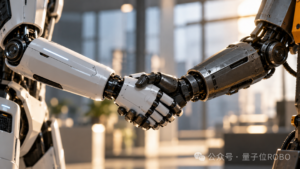
Suggested image: A futuristic robotics and physical AI ecosystem, featuring humanoid robots, industrial robotic arms, and intelligent machines working together.
Alt text: AI-generated illustration of humanoid robots and intelligent machines representing the physical AI industry.
Billion-dollar funding rounds are becoming increasingly common, startup valuations are reaching new highs, and investors such as NVIDIA, SoftBank, and Sequoia Capital are stepping up their bets.
But beyond the headlines, a more fundamental question remains: Where is all this money actually going? Surely, tens of billions of dollars are being invested for more than just hype.
A closer look at this year’s funding landscape reveals that capital is spreading across multiple layers of the robotics industry. From building robot hardware and developing general-purpose intelligence systems to establishing training facilities and exploring commercial applications, an increasingly diverse group of companies is entering the market.
A full-stack industry ecosystem built around physical AI is beginning to take shape.
A Record-Breaking Year for Robotics Funding: Where Is the Money Going?
According to data from PitchBook cited by the Financial Times, global robotics and physical AI companies had raised nearly $48 billion as of October 8, 2026.
Looking back, annual funding in the sector generally remained within the $10 billion to $15 billion range between 2022 and 2024. Investment accelerated significantly in 2025, and the momentum has intensified further this year. By early October, funding had reached approximately 1.7 times the total recorded for all of 2025.
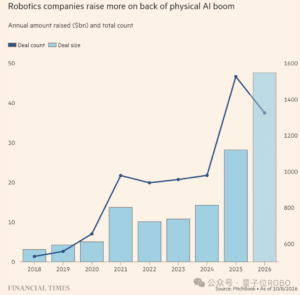
Suggested image: A chart showing annual global funding for robotics and physical AI companies from 2022 through October 8, 2026. Highlight the sharp acceleration in 2025 and 2026.
Source: Financial Times, citing PitchBook.
Alt text: Global robotics and physical AI funding from 2022 to October 2026, showing a sharp increase in investment.
A significant share of that capital is flowing to a relatively small group of market leaders.
Take Anduril, the US defense technology company developing AI-enabled autonomous systems. In May, it raised $5 billion at a valuation of $61 billion, doubling its valuation from the previous round. The financing was co-led by Thrive Capital and Andreessen Horowitz, making it one of the year’s most closely watched funding deals in the sector.
Meanwhile, companies targeting industrial and household applications are also attracting substantial investment.
NEURA Robotics, a German company developing both robots and intelligent platforms, announced a Series C financing round of up to $1.4 billion in June. Participants included Qualcomm, Amazon, and NVIDIA.
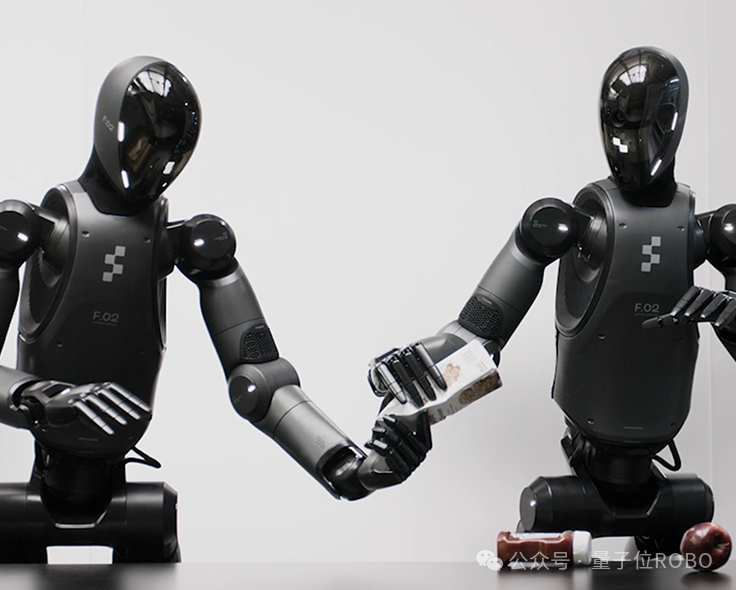
Suggested image: A photograph of a NEURA Robotics humanoid robot or another representative product from the company’s robotics portfolio.
Source: NEURA Robotics official website.
Alt text: A NEURA Robotics robot illustrating the convergence of robotics hardware and intelligent software.
While companies such as NEURA are developing hardware and intelligent systems in parallel, another group of heavily funded startups is focusing on the robots’ brains.
In January, US robotics foundation model company Skild AI raised $1.4 billion in a round led by SoftBank, with participation from NVIDIA and investment vehicles associated with Jeff Bezos. The round valued the company at more than $14 billion.
Another US startup, Generalist, which is also developing general-purpose foundation models for robotics, announced a new $400 million funding round in June, bringing its total funding to more than $500 million. NVIDIA, Bezos-affiliated investors, and others continued to back the company, while AI researcher Fei-Fei Li joined the list of new individual investors.
Physical Intelligence (π), meanwhile, secured $1 billion in the second quarter as it continued developing general-purpose models designed to work across different robot platforms.
These companies pursue different technical approaches, but they share a common ambition: to move robots beyond rigid, preprogrammed routines and enable them to learn from experience and adapt to a wider range of real-world environments.
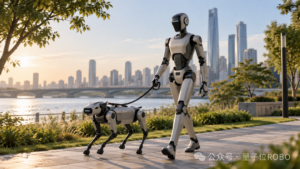
Suggested image: A robot interacting with everyday objects in a laboratory, illustrating how AI models enable machines to perceive, reason, and perform physical tasks.
Alt text: A robot using AI to interact with objects, representing the development of general-purpose robotics foundation models.
The growing enthusiasm for this field is also reflected in the structure of recent funding rounds.
According to a PitchBook report published in September, robotics and physical AI companies raised $18.6 billion in the second quarter of 2026, up 25.3% from the previous quarter. Yet the number of funding deals fell by 14.1%.
Three major rounds involving Anduril, NEURA Robotics, and Physical Intelligence accounted for a combined $7.4 billion, or 39.8% of the quarter’s total.
Even excluding those three deals, funding reached $11.2 billion, representing quarter-over-quarter growth of 9.9%.
The broader trend is clear: capital continues to flow into robotics, but an increasingly large share is concentrated in market leaders and technologies with the potential to become foundational platforms.
The funding landscape also reveals a clearer division of labor across the industry. Some companies are building robots and improving hardware performance. Others are developing general-purpose intelligence systems that can operate across different robot bodies. Still others are bringing robots into factories, warehouses, and homes in pursuit of large-scale deployment.
Investors are positioning themselves across the entire value chain, from research and manufacturing to real-world applications.
But for this value chain to function at scale, the industry must first solve a fundamental problem.
How do robots actually learn to do useful work?
Billions Are Being Spent on Robot Training: Teaching Machines to Work
The question may sound surprising. Today’s large language models can handle complex language tasks, write code, reason through problems, and plan multi-step activities. Why, then, is it still so difficult for a robot to pick up a cup, fold laundry, or tidy a desk?
One of the key reasons is a shortage of suitable training data.
Language models benefit from enormous quantities of text, images, and videos accumulated across the internet. Developers can use this material to train increasingly capable systems at scale.
Robots face a different challenge.
To pick up a cup on a table, a robot must identify the object accurately, estimate its position, understand its size and shape, plan a movement trajectory, and control the force of its grip. Change the environment or the task, and the robot may need to adapt its behavior all over again.
These capabilities depend on information about three-dimensional space, motion, physical contact, and force—details that existing internet data cannot fully capture.
To address this gap, robotics companies are experimenting with new ways to collect training data. One of the most unusual approaches came from US humanoid robotics company Figure, which announced its Index initiative in August.
The idea is straightforward: pay ordinary people around the world to help robots learn from human activity.
Through the Index app, participants record themselves performing everyday tasks, such as folding clothes, cleaning, and organizing shelves. Figure also provides specialized recording equipment, and contributors are paid for submitting footage that meets its requirements.
After screening and processing, these videos can become training material for robots learning to perform similar tasks.

Suggested image: An illustration or official image of a person recording an everyday household task for Figure’s Index data collection program.
Source: Figure official website.
Alt text: A participant recording everyday activities to generate training data for humanoid robots through Figure’s Index initiative.
As of August 25, the Index app had reportedly accumulated more than 264,000 downloads across 108 countries and regions. It had collected over 16 million video clips and paid contributors a total of $15 million.
At the data collection rate reported at the time, the platform was receiving the equivalent of 30 minutes of video every second—adding up to approximately 4.9 years of human activity footage each day.
Figure also planned to invest more than $1 billion in data and computing resources over the following 12 months.
In other words, the company was prepared to spend more than a billion dollars teaching robots how humans work.
Notably, Figure initially tried purchasing training data from third-party suppliers. However, external providers struggled to meet the company’s requirements for scale, diversity, and quality. Figure subsequently shifted toward building its own data collection infrastructure.
Similar experiments are taking place across the industry.
Physical Intelligence has sent robots into multiple Airbnb properties in San Francisco to evaluate their performance in unfamiliar environments. Generalist, NEURA Robotics, Skild AI, and other companies are also collecting data through their own training facilities.
The Financial Times has described these facilities as “robot gyms.”
Inside them, human operators repeatedly guide robotic arms through tasks such as moving objects, grasping items, and organizing materials. Sensors attached to the robots record the entire process, capturing data that can later be used to train AI models.
China is also building out this infrastructure at scale.
According to Interact Analysis, as of the end of April 2026, at least 90 humanoid robot data collection and training centers in China were either operational, under construction, or in the planning stage. Of these, 64 were already in operation.
As demand for training data grows, new players are entering the market.
Scale AI and Encord, which previously provided data services to large AI model developers such as OpenAI and Anthropic, are expanding into robotics. Meanwhile, newer companies are attracting significant investment.
On October 7, Mecka, a US startup specializing in real-world training data, announced that it had raised $60 million in Series B funding. The round was led by Sequoia Capital, with participation from NVIDIA, M12 (Microsoft’s venture fund), Qualcomm Ventures, Samsung, and others.
Robotics companies are building their own training facilities, established data providers are extending their businesses into robotics, and specialized startups are securing fresh capital.
Together, these developments point to the emergence of a distinct industry segment dedicated to robotics training data.
But collecting more data does not automatically make robots smarter.
That is the next question the industry must answer.
Can Robots Learn to Work from Massive Amounts of Data?
The willingness of robotics companies to spend heavily on data is rooted in a technical concept that has already helped transform large language models: scaling laws.
The rapid progress of systems such as ChatGPT has demonstrated the value of training models on increasingly large datasets, alongside greater computing resources and improved training methods.
The robotics industry is now searching for similar relationships—ways to help robots acquire manipulation skills, generalize across tasks, and adapt to unfamiliar environments through large-scale exposure to real-world data.
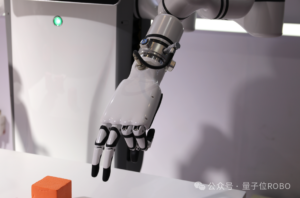
A conceptual illustration showing how increasing the volume and diversity of human activity data can improve a robot’s ability to perform physical tasks.
Research published by US robotics company Dyna Robotics in August offered evidence in support of this approach.
The company’s latest world action model, Dyna-2, was pretrained on more than one million hours of first-person human video covering everyday activities such as cooking, organizing objects, and assembling components.
To examine the effect of training scale, researchers compared models pretrained on datasets of 1,000, 10,000, 100,000, and 1 million hours of video.
The results showed that, across 14 real-world robotic manipulation tasks, average performance improved from 20% to 53% as the volume of pretraining data increased.
The results for turning a key were particularly striking. Models trained on less than 100,000 hours of video failed to complete the task, while the model pretrained on one million hours achieved a 90% success rate.
After fine-tuning with approximately 10 minutes of robot operation data, the pretrained model also demonstrated the ability to perform dexterous, two-handed bottle-cap twisting.
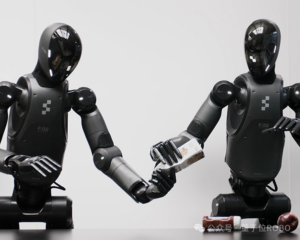
A robot performing a fine-motor manipulation task, such as turning a key or twisting a bottle cap with both hands.
Source: Dyna Robotics official website.
The findings provide preliminary evidence that large-scale human video pretraining can improve robotic manipulation and make it easier for models to acquire new skills.
Although the relationship still needs to be validated across more tasks and real-world environments, the results offer a technical rationale for the industry’s growing investment in data collection.
Volume, however, is only part of the equation. Data quality, task diversity, and the ability to transfer skills across different robot platforms also play important roles.
For this reason, the industry is exploring another approach alongside large-scale data collection: putting robots to work in real environments and allowing them to accumulate experience through actual deployment.
In April, Skild AI announced its acquisition of Zebra Technologies’ robotics business, including assets associated with Fetch Robotics. The deal gave Skild AI access to existing robotic products and software systems already used in warehouse and logistics environments.
Rather than relying entirely on laboratory-based data collection, Skild AI aims to use these commercial deployments to bring its general-purpose intelligence system into real warehouses. Data generated during day-to-day operations can then help improve the model.
According to operating figures disclosed by Skild AI last month, approximately 10 months after its first commercial deployment, the company had more than 60 paying customers and annual recurring revenue (ARR) exceeding $100 million. Its customers spanned logistics, manufacturing, security, food processing, and other sectors.
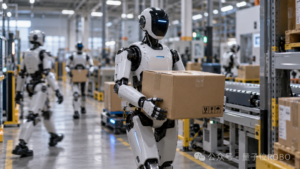
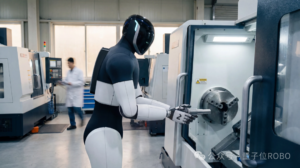
Autonomous or AI-enabled robots operating in a warehouse, manufacturing facility, or logistics environment.
Source: Skild AI official website.
The company is also working with NVIDIA and Foxconn to deploy Skild Brain on dual-arm robots, exploring high-precision assembly applications.
From purpose-built training facilities to robots learning through real commercial tasks, the industry is experimenting with more sustainable ways to build a continuous learning loop.
And similar developments are emerging in China.
China’s Embodied AI Investment Is Expanding Across the Value Chain
Earlier this year, Chinese technology research firm QbitAI published its 2025 Annual Report on Embodied AI Startup Financing.
According to the report, Chinese embodied AI startups recorded 447 funding deals in 2025, raising a combined RMB 55.4 billion. In 2024, the sector had recorded just 173 deals totaling RMB 13.7 billion.
Note: These figures cover publicly disclosed financing by unlisted companies and use a different methodology from PitchBook’s global data.
More significant than the increase in total funding is the shift in where the money is going.
QbitAI found that Chinese embodied AI investment was concentrated primarily in robot manufacturers in 2024. By 2025, as leading companies moved toward mass production and commercial deployment, capital had begun spreading into other parts of the value chain, including embodied intelligence models, core components, training data, and vertical applications.
Galaxy General Robotics, known in China as Yinhe Tongyong, set a new single-round funding record for the sector with a RMB 2.031 billion financing round. Meanwhile, Guanglun Intelligence, a synthetic data company, raised several hundred million yuan and reported annual revenue exceeding RMB 100 million.
At the same time, major Chinese internet companies, automakers, manufacturers, and state-backed investment funds are increasing their involvement.
These strategic investors bring more than capital. They can also provide supply chains, production lines, and access to real-world application scenarios.
This is particularly important in China, where the scale and diversity of the manufacturing sector offer significant opportunities for testing and deploying robots.
Factories and warehouses can serve two purposes: validating robot capabilities under real operating conditions and generating a continuous stream of training data.
As robots gain experience across different tasks, that data can be processed and fed back into their models, helping them tackle increasingly complex work.
Today, robotics companies still spend heavily on equipment, human operators, and dedicated training facilities to produce the data their models need.
But as robots enter real production environments, commercial deployment itself could become a continuous source of learning material.
More deployments generate more diverse data. Better data can improve model capabilities, making it possible for robots to enter new environments and take on additional tasks. This creates the potential for a reinforcing cycle of deployment, learning, and improvement.
Global investors are backing foundation models, while Chinese investors are helping strengthen the broader industrial ecosystem. Despite differences in their approaches, both are moving in a similar direction.
Model developers are seeking access to commercial deployments, while industrial investors are bringing robots into factories and production lines.
The value of real-world applications is expanding beyond simply testing whether robots work. These environments are becoming essential resources for training, learning, and continuous improvement.
The Real Breakthrough Will Come When Robots Learn on the Job
Paying people to record videos and having operators guide robotic arms through repetitive exercises may be necessary steps today. But these approaches are unlikely to represent the final form of robot training.
The more compelling prospect is a future in which robots accumulate experience through actual work, learn from the outcomes, and continually improve their own capabilities.
That future is not guaranteed. More data does not automatically translate into better intelligence, and the economics of large-scale deployment remain to be proven across many applications.
Yet the direction of travel is becoming clearer.
The next phase of physical AI will depend not only on better robot hardware or larger models, but also on the infrastructure connecting data collection, training, deployment, and real-world feedback.
If that loop can be made to work reliably and economically, commercial deployment could become more than a way to generate revenue. It could become one of the industry’s most valuable sources of intelligence.
And that may be the most exciting transformation of all—not simply that hundreds of billions of yuan are being invested in robots, but that robots are beginning to learn from the world they are built to operate in.