

Standfirst: Matteo Franceschetti, founder and CEO of Eight Sleep, on why the world’s next great robotics companies will come out of China’s automotive industry.
Based on Matteo Franceschetti’s interview on the 20VC podcast · October 2026 · 5-minute read
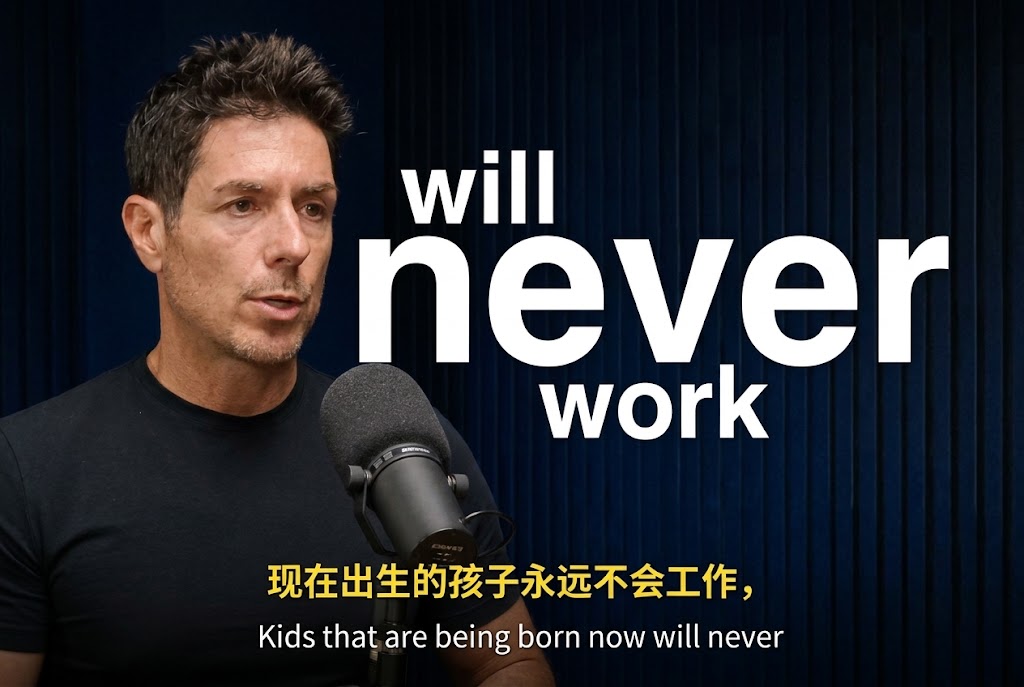
“Children being born today will never have to work for money. Chinese manufacturers — from Xiaomi to BYD — have already proven they can build world-class products across categories. Moving into humanoid robotics is the natural extension of that capability.” — Matteo Franceschetti, Founder & CEO, Eight Sleep

That is the view of Matteo Franceschetti, the founder of smart-sleep company Eight Sleep. The company is currently valued at US $1.5 billion, and its user base reportedly includes Elon Musk, Mark Zuckerberg, and Sam Altman.
A Company Running at 5x Silicon Valley Efficiency
Eight Sleep generates more revenue per employee than Apple. The business operates in 35 countries, yet the entire company runs with just 160 employees — including only five in finance. Per-employee output is roughly five times the Silicon Valley average, and between 2020 and 2025, revenue grew tenfold.
The company has also rethought how work itself gets done. Its engineers stopped writing code by hand about a year ago. When the two-person email marketing team lost its lead, rather than hiring a replacement, the company built bots to fill the gap — a decision Franceschetti credits as one of the key reasons Eight Sleep has been able to scale to its current size.
From Competitive Athlete to Twice-Rejected Founder
Franceschetti is an Italian entrepreneur with no background in tech. In his youth he competed in tennis, skiing, and karting. He studied law, graduated into a career at a top law firm — and then made an unlikely leap into smart sleep hardware. The early years were rough: Y Combinator rejected him twice. The turning point came in 2019, when the launch of the company’s Pod product finally opened up the market.
“A Loud Brand With a Bad Product Is Dead”
Speaking on a recent episode of the Silicon Valley podcast 20VC, Franceschetti argued that a great product is the foundation of any successful company. “A very loud brand paired with a bad product — that company is dead,” he said.
Why He’s Betting on China
Franceschetti is also notably bullish on China. Asked whether China is pulling ahead of the rest of the world, he didn’t limit his answer to sleep hardware. Instead, he pointed to the playbooks of companies like Xiaomi and BYD: Xiaomi has expanded from smartphones into cars, smart-home devices, and even components, while BYD has extended its parts-making capabilities well beyond the vehicle itself.
In his view, these companies have proven they can build world-class products across categories — and moving into humanoid robotics is the natural next step for that capability. On user experience, he added, many manufacturers elsewhere in the world simply aren’t as focused. And to Franceschetti, focus doesn’t mean doing one thing forever; it means continuously applying your capabilities to new frontiers.

From EVs to Humanoids: “The 1960s of Robotics”
Chinese manufacturers, Franceschetti argued, have already demonstrated exceptional product development and market insight in electric vehicles — outpacing Europe’s incumbent automakers. The next move, he said, is into humanoid robotics, executed in exactly the same way. He drew a direct analogy: today’s humanoid robotics landscape looks much like the automotive market of the 1960s. And just as that era shaped the century that followed, Chinese manufacturers will ultimately all become robotics companies.
Robots Are Moving Faster Than Most Expect
He also shared a striking observation: progress in humanoid robotics is already outpacing most people’s expectations. This year’s humanoid robot games offered proof — one robot broke Usain Bolt’s 100-meter record, and another set a new high-jump record. Next year’s games, he predicted, will be even more exciting to watch.

A Warning for Europe
Franceschetti closed with a note of caution. In a region like Europe — where the automotive industry sits at the commercial center of gravity — automakers that fail to build humanoid robots won’t just lose the car market. They will forfeit a trillion-dollar humanoid robotics market as well.