

2026 Isn’t Over, Yet $48 Billion Has Already Flowed Into Physical AI
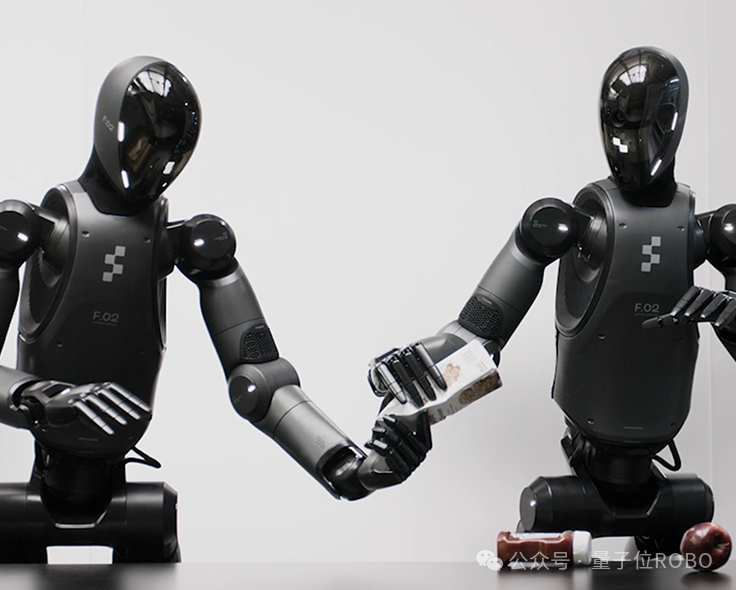
Global investment in robotics and physical AI is surging. With nearly $48 billion raised in just over nine months, capital is flowing beyond robot hardware and into foundation models, training infrastructure, and real-world deployment. The heat is intense—and shows no sign of fading. Global capital continues to pour into embodied AI at a remarkable pace. […]
Morgan Stanley: Physical AI Could Multiply Global GDP by 8–10 Times, with China Remaining a Key Player
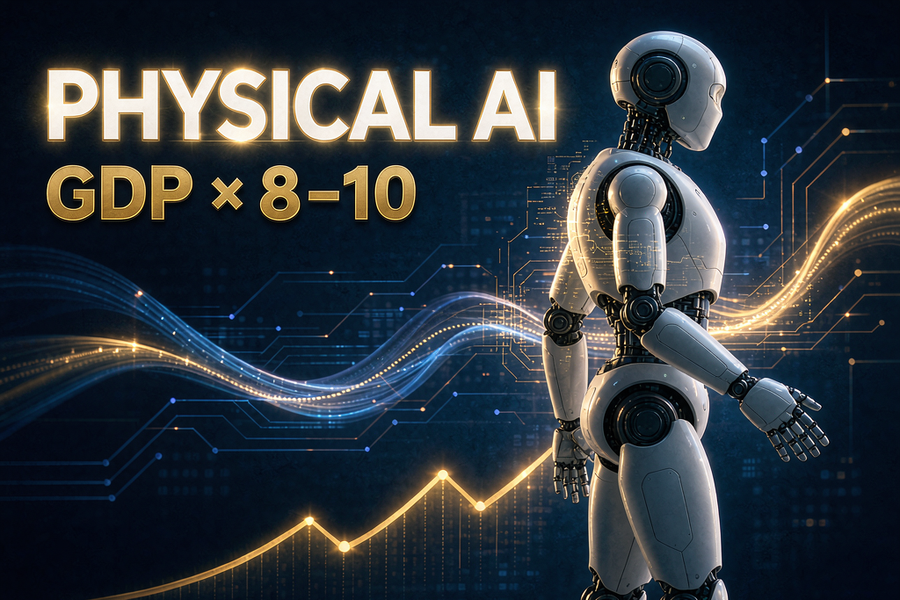
Introduction: Morgan Stanley predicts that physical AI could drive global GDP to 8–10 times its current level over the coming decades, potentially reshaping the global manufacturing landscape. Over the past several decades, the center of gravity of global manufacturing has steadily shifted toward China. From consumer electronics and automotive components to rare earth materials and […]
The Second Half of Physical AI: From “Can Demo” to “Can Deliver” — and Why Trade Show Floors Are Becoming Proving Grounds
In the first half of 2026, the world shipped nearly 25,000 humanoid robots, up 432% year over year. Impressive numbers — but what interests me most isn’t the numbers themselves. It’s the shift in narrative they signal: Physical AI is graduating from its adolescence of “technical demos” into the adulthood of “scaled delivery.” And the exam hall […]
World Models: AI’s Physical Intuition or the Next Tech Bubble?
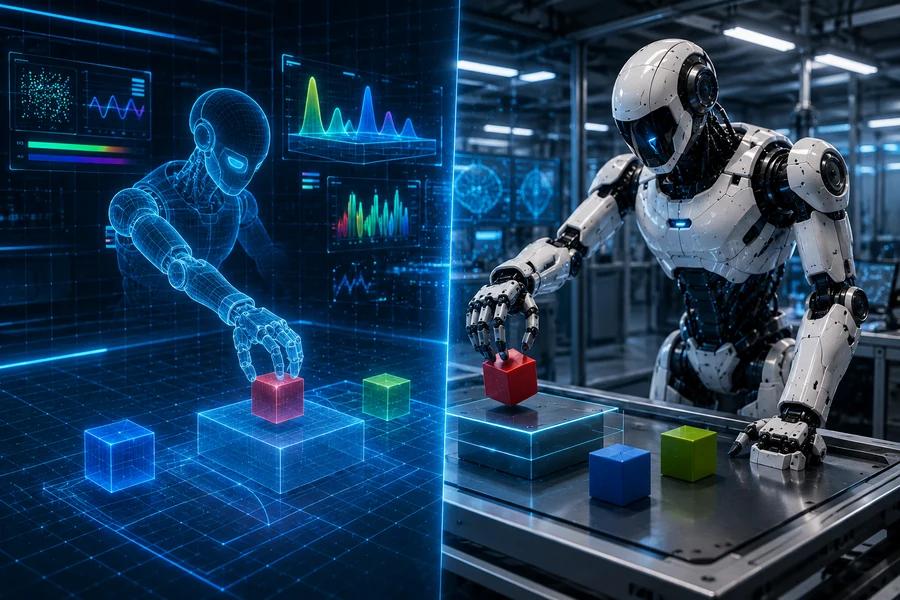
From video generation to real-world robotics, world models are emerging as a key concept in Physical AI. But can they truly help machines understand the physical world, or is the industry getting ahead of itself? 1. The News: World Models Move into the Physical AI Spotlight World models are becoming one of the most talked-about […]
Founded Just Three Years Ago, Now the World’s Most Valuable Humanoid Robotics Company — How Did Figure AI Do It?

There is a new breakout player in the humanoid robotics industry. Founded just three years ago, the company has reportedly reached a valuation of more than $36 billion, making it the world’s most highly valued humanoid robotics company. The company is based in the United States and is called Figure AI. And behind the company’s […]
Strategic Partnership Between WITEX 2027 and AIM Global: Building a Global Industrial Ecosystem for Physical AI and AIDC Technologies

WITEX 2027 World Intelligent Technology Expo, the flagship global exhibition for Generalized Physical AI full‑value‑chain industry, announces its official strategic partnership with AIM Global, the world‑renowned non‑profit association for Automatic Identification and Data Capture (AIDC). Both parties will pool industrial resources to boost adoption of AIoT, auto‑ID and sensing technologies across European markets. With over […]
Figure and Nscale Forge Strategic Partnership, Raising the Bar for Physical AI
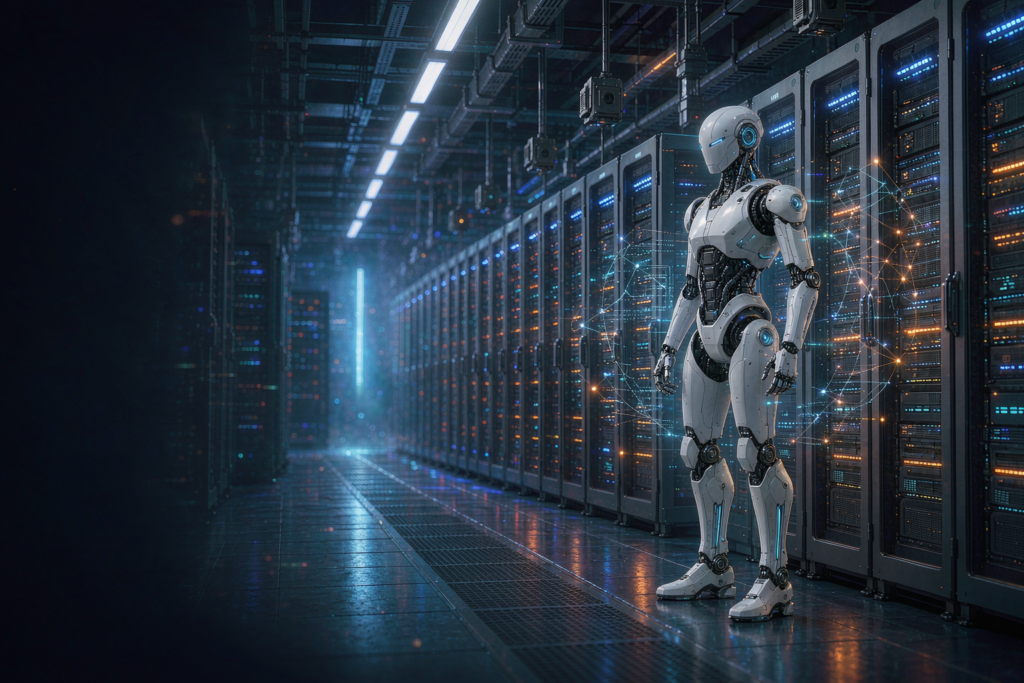
On September 3, 2026, humanoid robotics leader Figure and AI cloud infrastructure provider Nscale announced a major strategic partnership. Far more than a conventional commercial agreement, the deal signals a significant shift in the competitive landscape for embodied and physical AI, as leading players move to secure the computing infrastructure required to scale their systems […]
Dropout Is Dead. Long Live Dropout.

In 2025, Stanford researchers did something that would have sounded almost heretical a decade ago. They published a paper at ACL titled “Drop Dropout.” Yes: drop dropout. Dropout was introduced by Geoffrey Hinton and his colleagues in 2012 as a way to prevent overfitting in deep neural networks. It quickly became one of the foundational […]
JD.com Launches JoyAI-Echo WM World Model, Plans 100,000-GPU Compute Cluster and 3 Million Robots Over Five Years
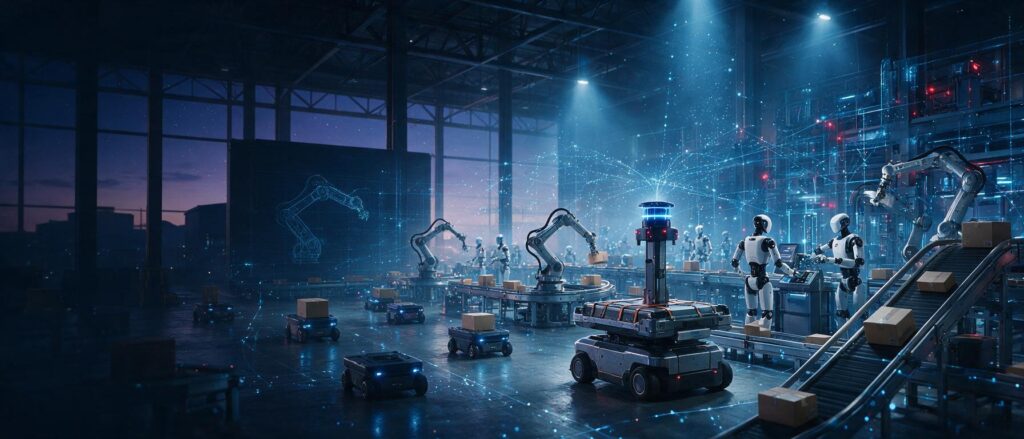
JD.com recently unveiled a three-part Physical AI strategy at the JDD Conference: an open-source world model, a plan for a 100,000-GPU domestic compute cluster, and the procurement of 3 million robots over the next five years. These three initiatives span four critical layers of the Physical AI stack: compute as the foundation, data as the […]
Former NVIDIA AI Director Is Taking Aim at the Transformer With a 5-Trillion-Token Vision of Physical AI
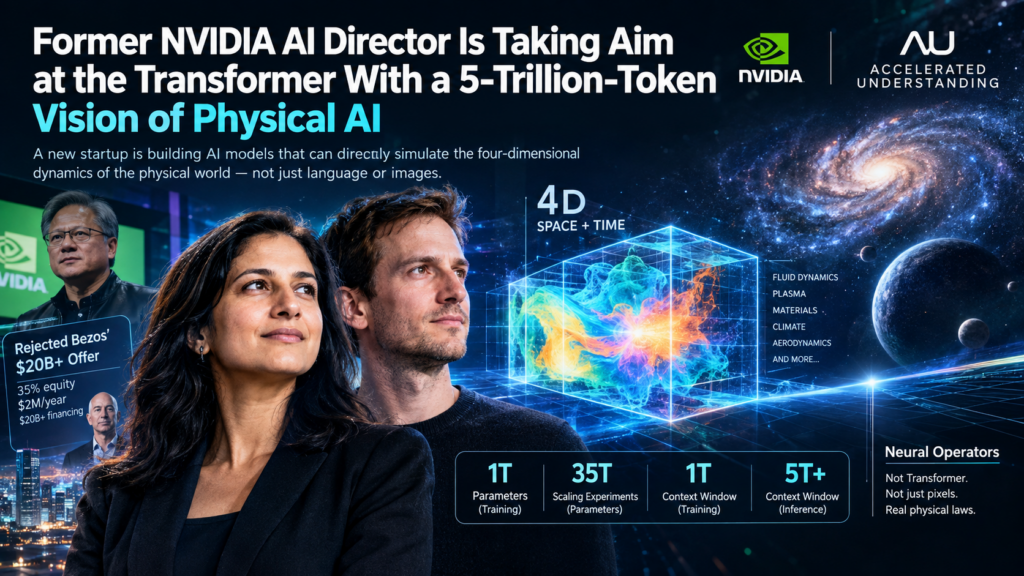
A new startup says it is building AI models that do not merely generate language or images, but directly model the four-dimensional dynamics of the physical world. If its claims hold up, the implications could be enormous. The next frontier of artificial intelligence may not be language. It may be the physical universe itself. Large […]